

I am going through my Machvaia files and looking for something inspiring I might write about. Also, throwing away old material I have no use for anymore. It's a good and freeing feeling to get rid of stuff. Always, in America, one is haunted by stuff, and cajoled to buy more stuff, and having a hard time to find misplaced stuff because there is so much stuff. Now that I have Church of Cheese published, I can toss away many pages of paper stuff.
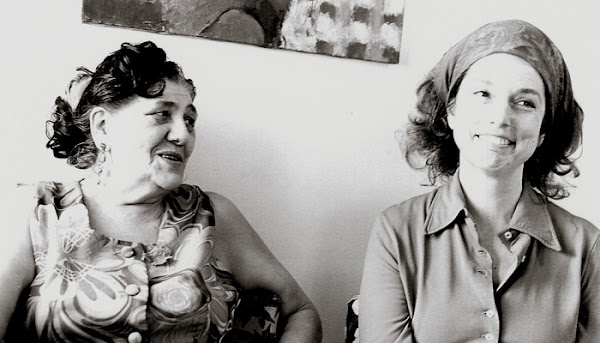
But this, recorded in 1968, I will keep and share with my bloggers.
When we met, Lola and Bahto, the Machvaia parents of nine grown children, hadn't lived together since Bahto left Lola for another woman many decades earlier. Bahto now lived with his son, and Lola was on her own. Lola admitted he had proposed they get back together some years earlier, but she refused.
Bahto was older than Lola by maybe twenty years and, when he died, she told me about the post-death year when the Dead One comes to visit. Most of the Machvaia are more afraid of ghosts than anything else, but Lola never was, or so she said. "After Dinah (her daughter) died, I was never afraid of ghosts." She seemed quite tranquil about the times she "saw" Bahto, and rather smug that it was the ritually correct number, three.
Lola: Once I saw him (Bahto) in his trunk (coffin) when I was living on Linden Avenue. I was sitting on the sofa, looking out at the traffic, and then I looked at my room and saw him. I felt a little scared -- no don't write that. I was startled, not scared. Then he was gone.
Another time he showed up and I asked him where the money was. He said he couldn't tell me, but I should ask Miller (their son) where it was. Miller told me he wished he knew.
The last time, I was in my ofisa (business office for fortune telling) and someone rolled a big rug in on the floor. Then they tacked another on the outside. That's bad, you know, a rug (where you walk is polluted). Then the Old Man (Bahto) came in and didn't say anything.
So I left and went to town to shop and when I came back, the rugs and the Old Man were gone. That's good. It means he took away all the heaviness, the bad luck, and the sorrow.
Monday, August 9, 2010

Thursday, August 5, 2010
Seattle in summer
Seattle, in summer, is a most agreeable city. Sun shadows flicker a changing green through the maples outside and onto the wall of my apartment. The light is long; in the evenings, I sit on the deck and read The New Yorker. Doors and windows open, we all share the music, the cacophony and motion of the passing cars, intriguing bits of conversations. Here, near the University, the parking strips are dotted with "free" furniture that recycles, and comes and goes, as students come and go. Sun warms up smiles, clouds dissolve into puffs, and we are released from the bondage of winter jackets. Fleece could have been invented for the purpose of comfort during the many damp Seattle months. But summers I wear cotton, my California clothes, the flowered pajama bottoms, T-shirts, sunglasses, plastic earrings, shorts, and tan my legs. On blue sky days, driving over the hills, the stark snowy peaks to the west, the Olympics, and the east, the Cascades, cradle the city in fingers of epic proportion. I lived here once before and who would have guessed that featureless and forbidden Sandpoint Naval Air Station would transform into a park with tide pools, a parade of orca sculptures, public boat dock, a field for ground-nesting birds, and a lake clean enough for salmon? Organic blueberries, peaches, and sweetly pale Rainier cherres are in season and then quite quickly gone. Over too soon, that's summer in Seattle.
Wednesday, June 9, 2010
Myrtle/Mimi
Hot off the press, the sequel to the oral history of our mother's childhood, Myrtle of Wild Rose Prairie, is complete. After much ferreting into the past and brain racking for stories, Memories of our mother Myrtle/Mimi, the memory bits of Myrtle's four remaining children, now in our 70s and 80s, are typed and bound. What we learned is that there were multiple Myrtles and many mothering experiences, and what we are mostly left with is the critical feeling of her presence. Mother lived 95 and a half years. So what is death, we wonder, when we feel her still more alive in loving essence than she will ever be in memory?
Had we been younger, had our mother still been alive, her bio would surely had run from a modest 40 pages into the hundreds. Several of her grandchildren, as well as a niece and nephew, helped. We wrote it for our family, as a tribute to Myrtle/Mimi -- in mid-life she became Mimi -- as well as a gift to ourselves, a snapshot of our times, this past century, and whatever benefit might accrue to future generations.
Had we been younger, had our mother still been alive, her bio would surely had run from a modest 40 pages into the hundreds. Several of her grandchildren, as well as a niece and nephew, helped. We wrote it for our family, as a tribute to Myrtle/Mimi -- in mid-life she became Mimi -- as well as a gift to ourselves, a snapshot of our times, this past century, and whatever benefit might accrue to future generations.
Tuesday, May 18, 2010
book talk
My book talk at Third Place Books in Ravenna went, in my opinion, quite well! Good turnout, mostly friends, friends of friends, and family, some of whom hadn't seen one another for years, and were stunned, as they admitted later, at how everyone had aged. The audience seemed pleased with the powerpoint pictures, particularly the one of Stevo -- Stevo's was the missing face in Lola's Luck. Stevo's studio portrait was taken by an agreeable gay couple who once had a studio on University Way -- they loved his arms and draped them fetchingly beneath his chin. My low-pixel camera shots of Machvaia, taken by a cheap camera, suffer from the comparison with Stevo's finely rendered studio shot. The only way I could bribe Stevo to patiently sit and be posed was to promise him a pitcher of martinis. The camera clicked as I came through the door with his reward and he beamed. Enticingly.
Thursday, April 29, 2010
STEVO
Those who have read Lola's Luck will remember Stevo. He called me several weeks ago. We hadn't talked for more than twenty years and I went into catatonic shock. In fact, when we hung up, I made a list of all the things I might have said to ease my frustration.
We laughed about the name I chose for him for the book, Stevo Polo -- Polo is his favorite aftershave. He wanted to be in the movie, not as romantic lead, of course, but rather "an older man." There is no movie, I explained and I could tell he found that hard to believe. Apparently, the big Hollywood Movie rumor, and big Hollywood dollars, is making the Roma rounds.
He asked some personal questions, of course, and admitted he is now living with an American woman, not the Spanish lady of an earlier time, but someone else. He still lives in a jealous world, I note, and is apparently no more available for contact by telephone than he was when he lived with wife Tutsi. But he is still alive and that is very good to know.
Saturday, April 24, 2010
Watching The River, a Renoir movie from the 50s, a movie I picked up at Scarecrow Video, I realized the world, and myself, had drastically changed. Why did I ever like it, I wonder? This time around it struck me as irritating and racist. The Indians are pretty much props to the central story. I am left wondering, after the white boy is killed by a snake, what happened to the little boy who was his Indian friend. This movie was done by a Frenchman; I always expect the French to be astute, philosophical, broad-minded. I would bet that was the case, for Jean Renoir, and the way The River seemed to me at the time. Times do change.
My brain is not wired for computers and I have a twitchy eye. Last week, grandson Marcus created my blog. My web site took more steps; granddaughter Elicia did the CD, a chap I paid signed me up with godaddy, and, after that, a sweet young man from upstairs with baby Connor on his lap finally got it up and running. A friend, my masseuse Patricia, managed to make the flyers for my book talk next month. My son Colin showed me how to put some Gypsy pictures on a thumb drive; pictures will add imagery to my talk. I have never felt more helpless, and now I find my own egocentric face in the "friend" category on my blog. How did I do that? Can I take it out?
My brain is not wired for computers and I have a twitchy eye. Last week, grandson Marcus created my blog. My web site took more steps; granddaughter Elicia did the CD, a chap I paid signed me up with godaddy, and, after that, a sweet young man from upstairs with baby Connor on his lap finally got it up and running. A friend, my masseuse Patricia, managed to make the flyers for my book talk next month. My son Colin showed me how to put some Gypsy pictures on a thumb drive; pictures will add imagery to my talk. I have never felt more helpless, and now I find my own egocentric face in the "friend" category on my blog. How did I do that? Can I take it out?
Wednesday, April 21, 2010
Last night a Machvanka called -- I will call her Lana. She called after 10 pm my time. She is on the east coast and I always think that she calls when she is alone and can't sleep, when her husband is out with the "boys," drinking, gambling, making good luck with good times, something no upstanding Machvaia wife would ever complain about.
We always talk about her mother, a woman who, three years ago, left this world for The Other Side. Lana misses her mother and asks me, her senior by a generation and an old friend of her mother's, why that excellent woman no longer appears in her dreams.
But remember, I say, she came just last week when you were full of sorrow. She came as a pretty butterfly and geve you healing kisses all over. Remember?
Lana does remember but wonders why the kisses were so strongly suctioned that she had to wrestle each of them off?
That's because, I venture positively, she really wanted you to notice her, to pay attention and stop the bad luck of grieving. Too many tears can make you sick.
When Lana calls, we are joined in a comfortable conspiracy of remembering and cherishing her mother. Lana calls me several times a month.
Subscribe to:
Posts (Atom)