

Saturday, June 15, 2013
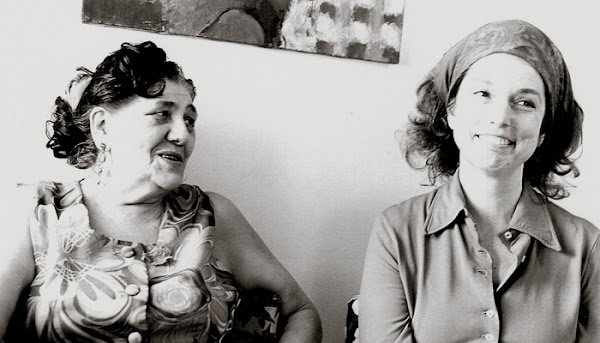
Two Parents Living, 1978
My father carries the heavy luggage, as he has always done, ignoring the wet mist of rain in his face and the puddles staining his shoes. He leads the way, hurrying mother by his urgency, projecting the sense of positive directions and insistent goals. They will spend twenty-one drowsy, dulling hours on the bus. But he will be the first in line, getting on, getting off.
He would have preferred to fly. But only a family emergency can get my mother on a plane. After a week of eating and over-eating at the recommended San Francisco restaurants, they are leaving, traveling back to Washington State the way they came, by Greyhound bus.
Turning away from the car, they deny my request to wait while I park and return to see them seated. "That isn't necessary," says my father brusquely, rejecting the sentiment of a lingering goodbye. And I know, from knowing him all my life, the irritation, should I insist, at the slightest implication that he has requested or required either comfort or solicitude, when he doesn't, he never has.
My role is to smile and wave and pretend I must hurry off to another appointment.
I note it is with increasing difficulty that my father stands tall, essaying the weight of two suitcases, a furled umbrella, and the invariable briefcase, holding fast to a graying grace through the awkwardness of double doors. He holds them impatiently for her, for my mother -- once a sunburned black-haired tomboy who still moves with an athlete's natural grace -- at his side and a step behind, seconding him, supporting his will and wishes in the style of that era, maternal, serene, attentive. I wonder, does she hope never to be first? He invariably leads the lead, our boss, paterfamilias, responsible for everything that might affect us, or him, and to the world for the public standing of everyone in his family.
I can't even imagine what it is to be a man of his time and responsible for such impossible tasks.
While he saw friends -- he has a gift for male friends -- mother and I who are close in mind and spirit walked together, looked in windows; we shopped, we shared practical advice about domestic affairs and conspiring giggles that echoed my childhood's long ago. Married fifty-some years, she is nervous now when Jack is not near, when he is walking the city alone, or meeting his buddies in places she doesn't know. Time has tempered my father's fierce command, the hunger for prizes and fame that once flared at his frightened children. But though he is more forgiving of failure, I know he will never approve of my current lifestyle, writing and living on a shoestring while doing fieldwork. When he says so, I am aware he is only stating a matter of principle, the Horatio Alger bid for monetary success that he has lived by. Still, hurt and dismay wells in my throat.
Harder and harder, each time, to watch them leave.
Much to learn from them and little time, about how to treat my own children and, of course, about who I am.
A crisis of contrary expectations dogs our generations. Mine is hippie; theirs spells accumulation as logo and material increase as legend. Father collects bonds, bank accounts; he manages the estates of vanished male friends and advises their widows. Mother collects children -- she had five -- genealogies, sagas of births, weddings, increase, reading me the names. The tree-chopping, city and highway building policies that pushed the country West and the theme of hard work, the expansionist American Dream, propelled them up a class. I have always had two mothers. One speaks for father and most likely herself, protesting the present sons-in-law and the previous sons-in law. Weak men, she says, poor providers, too young for my sisters and I, too artistic, too much hair, not enough discipline, not enough -- as is unspoken but obvious -- like father. While I helped her into her jacket, however, the other smiled and whispered "Have fun," gifting me with the convivial advice that speaks of her own unfettered and happy childhood, running and climbing through a wild of woods and fields.
Born into the middle-class, I don't feel any urgent need to 'make it' or 'succeed.' I do want to 'help,' however, and became an anthropologist for that reason.
My own mortality is foretold in those straight, unrelenting backs and the heads that won't look back. If we were Gypsies, we could cry, holding and together for a time. Instead, I am left with their tears and mine to shed, saddened at the thought of their eventual separation, for the one of them that will be left behind, and for myself, who always is.

Friday, June 14, 2013
Mill Valley, 1989
Once I lived in Mill Valley. Mornings, I wrote and, after lunch, walked to the Book Depot in the middle of town for the company and coffee. Afternoons, I often took another walk among the coastal redwoods, and sometimes into the hills. At various spots and high enough, I could see the ocean, Sausalito, San Francisco.
On one of these hikes, I met a dark-haired young man wearing a brilliantly tie-dyed t-shirt. Life with the Machvaia Roma had taught me to share my thoughts and I immediately confessed his shirt struck me as knockout. He asked if I were a Deadhead -- Marin was full of Deadheads. Deadhead music had never appealed to me and I said so. Nevertheless, he peeled off the shirt which he had acquired at a Deadhead concert. "Here, you like it, you keep it," he jauntily said and continued on his way.
I treasured his gift, mostly for the manner of the giving. Then, after a year or so, I immediately gave it to someone I didn't know who admired it in passing.
Giving is an art and a practice. Giving can be practiced as an art.
Thursday, May 26, 2011
Light Bulbs
My brother has bathroom light on the first floor of his house that he says he hasn't changed for fifty years. We had been talking about lights when he mentioned his everlasting light bulb and praised the genius of big business and American corporations, like GE, who made it. John is very pro-corporation.
My reaction was somewhat different. If corporations can manufacture such wonderfully powerful bulbs, it seems to me rather cavalier of GE and negligible of the public good that they fail to do so. (Of course, lights bulbs that burn for fifty years would markedly reduce future sales.)
I adore my brother. He keeps me stretched in the worldly direction, not least because I am required to consider beliefs and opinions outside my comfort zone.
My reaction was somewhat different. If corporations can manufacture such wonderfully powerful bulbs, it seems to me rather cavalier of GE and negligible of the public good that they fail to do so. (Of course, lights bulbs that burn for fifty years would markedly reduce future sales.)
I adore my brother. He keeps me stretched in the worldly direction, not least because I am required to consider beliefs and opinions outside my comfort zone.
Thursday, May 19, 2011
Rose's Indiscretion
Last week, a voice from the past. The call was from a Machvano whose wife's ofisa was once just two blocks from my San Francisco apartment. While reading Church of Cheese, he had been reminded of his aunt Rose's hard life. "So sad,' he said. "And that's all true; I know those stories." Then he added, "You're a writer and you have to write true stories."
A compliment, surely. A half century ago when I first met Machvaia, they were still smarting from the Marlene Dietrich movie "Golden Earrings" and told me that Outsiders knew "nothing true" about Gypsies. But how can Machvaia be portrayed accurately or fairly in consideration of their secretiveness and the stringency of a social structure that defines any cross-culture contact, other than the economic, as criminal?
Then I remembered that Rose had been married to an Outsider, a Gadzo, and publishing her story in a book was no different than broadcasting it at a slava or a wedding, sacred times when the ideal of seeing one another in the goodly way is the appropriate format. Stories, like Rose's, are shames when they become public knowledge. The Machvano caller was Rose's kinsman, which meant he shared her bloodline shame. Through the usual gossip hotline, many had undoubtedly heard about Rose's indiscretion. And more had suspected. But as an eyewitness author, I had given her error the full credit of black and white, irreversible, print.
Charley was kind enough to admit Rose's story was true. But his statement, "You have to write true stories," suggests that he wanted to believe I was required, by the necessities of my craft, to betray him.
A compliment, surely. A half century ago when I first met Machvaia, they were still smarting from the Marlene Dietrich movie "Golden Earrings" and told me that Outsiders knew "nothing true" about Gypsies. But how can Machvaia be portrayed accurately or fairly in consideration of their secretiveness and the stringency of a social structure that defines any cross-culture contact, other than the economic, as criminal?
Then I remembered that Rose had been married to an Outsider, a Gadzo, and publishing her story in a book was no different than broadcasting it at a slava or a wedding, sacred times when the ideal of seeing one another in the goodly way is the appropriate format. Stories, like Rose's, are shames when they become public knowledge. The Machvano caller was Rose's kinsman, which meant he shared her bloodline shame. Through the usual gossip hotline, many had undoubtedly heard about Rose's indiscretion. And more had suspected. But as an eyewitness author, I had given her error the full credit of black and white, irreversible, print.
Charley was kind enough to admit Rose's story was true. But his statement, "You have to write true stories," suggests that he wanted to believe I was required, by the necessities of my craft, to betray him.
Tuesday, February 22, 2011
At the zoo
A sunny winter Sunday at the zoo and nearly everyone is here with children. These are young children, a good share of them traveling on a parent's hip or in a stroller. Encountering the Macaque exhibit, some like to scream with fear and excitement, but most just stare in amazement at the wonder of being new to this world. School is out today; where are their older siblings? Does enthusiasm for viewing caged animals in the company of one's devoted parents fade just a few years short of Middle School?
Many of these children old enough to talk are speaking Spanish. Or is that Spanish? Picking words out of the air, I try to guess their meaning. Presidents Day is United Nations day at the zoo, and fuels my linguistic resolve. I promise, in my next life, to become fluent in at least three languages, an enterprise best begun, of course, at the age of my Kinder-pal zoo associates. In the Siamang area, against a background of hoots and shrieks, I come upon a large extended family taking pictures and giving directions in what they assure me is Czech.
I meet a young and pretty woman who is a student in something like behavioral biology; she sits on a bench and takes copious notes of orangutan activity. The lady orang grooms her hefty orang consort, happily chewing whatever she is finding in his fur. Although the male is facing away, the female, her round face vulnerable and tender, glances, on occasion, toward the parents and children assembled just beyond the glass. It crosses my mind that the other apes, the gorillas and chimpanzees, being genetically closer to our Homo sapiens species, never appear quite so benignly naive.
Further on, a father tries to hold his unhappy toddler daughter on a fence and take her picture. I volunteer and, while suspecting the background and the elephant are totally out of range, shoot the two of them with the father's cell phone. Many decades ago, I worked as a camera "girl" at the Hyatt in SF's Embarcadero. The camera was quite large, strapped over my shoulder and braced across my lower arm. The results, as I recall, were invariably vivid, flattering, pleasing, and easy to market, particularly on holidays and birthdays. I would race to the lower hotel level to get the film developed and return with a stack in a variety of sizes.
When these children are grown, more foreign to them than the languages I now hear around us will be the concept of developing film, film itself, and even the retro possibility of taking a picture with a single function camera.
Many of these children old enough to talk are speaking Spanish. Or is that Spanish? Picking words out of the air, I try to guess their meaning. Presidents Day is United Nations day at the zoo, and fuels my linguistic resolve. I promise, in my next life, to become fluent in at least three languages, an enterprise best begun, of course, at the age of my Kinder-pal zoo associates. In the Siamang area, against a background of hoots and shrieks, I come upon a large extended family taking pictures and giving directions in what they assure me is Czech.
I meet a young and pretty woman who is a student in something like behavioral biology; she sits on a bench and takes copious notes of orangutan activity. The lady orang grooms her hefty orang consort, happily chewing whatever she is finding in his fur. Although the male is facing away, the female, her round face vulnerable and tender, glances, on occasion, toward the parents and children assembled just beyond the glass. It crosses my mind that the other apes, the gorillas and chimpanzees, being genetically closer to our Homo sapiens species, never appear quite so benignly naive.
Further on, a father tries to hold his unhappy toddler daughter on a fence and take her picture. I volunteer and, while suspecting the background and the elephant are totally out of range, shoot the two of them with the father's cell phone. Many decades ago, I worked as a camera "girl" at the Hyatt in SF's Embarcadero. The camera was quite large, strapped over my shoulder and braced across my lower arm. The results, as I recall, were invariably vivid, flattering, pleasing, and easy to market, particularly on holidays and birthdays. I would race to the lower hotel level to get the film developed and return with a stack in a variety of sizes.
When these children are grown, more foreign to them than the languages I now hear around us will be the concept of developing film, film itself, and even the retro possibility of taking a picture with a single function camera.
Saturday, January 29, 2011
Moving
I love this packed-in Wallingford neighborhood with water views of Lake Union and the canal. Today, I drove slowly down my street, cars on both sides as always, waited for Debra's Penske van to get situated, and then parked carefully in my minimal garage space. Driving, parking where I live is always a tight squeeze and I see the moving van is a bit of a walk from the front door for the movers. I meet Debra in the hall; she says she is moving to a house in West Seattle.
The little rental moving van reminds me of Mill Valley and how we Marinites would try to warn the monster trucks that store a dozen households' belongings before they could turn onto the twisty, narrow Mt. Tamalpais roads and get stuck in the redwoods. As the vans lumbered by, I would wave my arms and shake my head from side to side, which is "No" in sign language. I lived in the flat, flood-prone part of town, on camellia-lined Miller Avenue, and within walking distance of The Book Depot. Other people lived on the mountain, and I never discovered how they got up there, and left, with all their stuff.
I have lived in a number of places and, for me, the perfect situation would involve the civil amenities of relative quiet, clean and healthy air, and a variety of songbirds, combined with fun urban things like great restaurants, museums, and lots of interesting people to meet and things to do. I settle for some part of this picture.
The little rental moving van reminds me of Mill Valley and how we Marinites would try to warn the monster trucks that store a dozen households' belongings before they could turn onto the twisty, narrow Mt. Tamalpais roads and get stuck in the redwoods. As the vans lumbered by, I would wave my arms and shake my head from side to side, which is "No" in sign language. I lived in the flat, flood-prone part of town, on camellia-lined Miller Avenue, and within walking distance of The Book Depot. Other people lived on the mountain, and I never discovered how they got up there, and left, with all their stuff.
I have lived in a number of places and, for me, the perfect situation would involve the civil amenities of relative quiet, clean and healthy air, and a variety of songbirds, combined with fun urban things like great restaurants, museums, and lots of interesting people to meet and things to do. I settle for some part of this picture.
Saturday, January 1, 2011
Green Lake
December 31, 2010 is a rare and fair, cold and sunny, day. Bare trees lace their arms against the sky and the choppy water of the city lake shivers itself blue. My face and ears are freezing cold and I envy the bearded chaps with puffs of hair on their faces for insulation. Above, a helicopter rotors a distant background rumble as I overhear bits of conversations, "symphony," "ashram," "wrong color," "Keep doing it." To me, Green Lake is the center of the city, the place to go to see the Seattle people, and sometimes you even see your friends.
Everyone, child, adult, pram, and bicycle, passes me by. Dogs in sweaters, hats, outfits, dogs are part of the parade. Runners' shoes thump on the pavement, and the air disturbance shoots a few zippy, trippy endorphins in my direction. Maybe that is what keeps me going, walking as fast as I can.
Nowadays, no one walks with me; I am slow. With increasing neuropathy, I attend to my stride and the ground ahead, doing the best I can. In the past, my sisters, sometimes all three of them, walked with me. Many years ago, we sometimes saw our father, in his eighties, running. For some reason, he wasn't supposed to run, so we hid or pretended we hadn't seen him. Even yet, a ghost of that memory will trot him past the outside corner of my eye.
The sun is out at Green Lake. Next time, I'll bring my ear muffs.
Happy 2011.
Everyone, child, adult, pram, and bicycle, passes me by. Dogs in sweaters, hats, outfits, dogs are part of the parade. Runners' shoes thump on the pavement, and the air disturbance shoots a few zippy, trippy endorphins in my direction. Maybe that is what keeps me going, walking as fast as I can.
Nowadays, no one walks with me; I am slow. With increasing neuropathy, I attend to my stride and the ground ahead, doing the best I can. In the past, my sisters, sometimes all three of them, walked with me. Many years ago, we sometimes saw our father, in his eighties, running. For some reason, he wasn't supposed to run, so we hid or pretended we hadn't seen him. Even yet, a ghost of that memory will trot him past the outside corner of my eye.
The sun is out at Green Lake. Next time, I'll bring my ear muffs.
Happy 2011.
Wednesday, November 17, 2010
Eli Wallach
I read in the NY Times that Eli Wallach, at 95, just got an Oscar! How gratifying to find he is still alive and acting! I remember the excitement of that first Broadway show when we arrived in New York, Teahouse of th August Moon. Eli was the poignant and funny star, a combination that was his forte. I don't recall the story, but a gracefully slow and turning dance by a Geisha sticks out in memory. Eli must have been in hundreds of things since then, some of which I have had the luck to see in movies or on television. Salut to Eli!
Half a century ago, after selling our Seattle house, our little family moved east and quickly spent the entire profit on tickets to on and Off-Broadway plays. Sometimes, when we felt flush, there were even meals at popular restaurants. Four years later, returning west, we were required to rent for a time and money was tight. But we never regretted those trips from New Jersey to Manhattan. Musicals were the thing; we saw them all, even My Fair Lady -- $50 for two tickets. And dramas, comedies, an opera now and then, a Myra Hess concert at Carnegie Hall, Three-Penny Opera in a run-down building with two fire trucks parked at the curb . . . Who wouldn't trade practical for the wealth of such memories?
Machvaia believe that what goes around comes around. Have these experiences anything to do with the passion of my grandson, Marcus Ho, who is a marvelous, if not yet Eli famous, actor in New York?
Half a century ago, after selling our Seattle house, our little family moved east and quickly spent the entire profit on tickets to on and Off-Broadway plays. Sometimes, when we felt flush, there were even meals at popular restaurants. Four years later, returning west, we were required to rent for a time and money was tight. But we never regretted those trips from New Jersey to Manhattan. Musicals were the thing; we saw them all, even My Fair Lady -- $50 for two tickets. And dramas, comedies, an opera now and then, a Myra Hess concert at Carnegie Hall, Three-Penny Opera in a run-down building with two fire trucks parked at the curb . . . Who wouldn't trade practical for the wealth of such memories?
Machvaia believe that what goes around comes around. Have these experiences anything to do with the passion of my grandson, Marcus Ho, who is a marvelous, if not yet Eli famous, actor in New York?
Saturday, October 30, 2010
Suzzallo -- a fond goodbye
SUZALLO LIBRARY
As acolyte at the University,
I am entranced by the long shelves
that reach unending around corners,
flooding floors and buildings,
a bounty of accumulating wealth
bound into books,
worlds upon worlds,
all mine.
Here I'll find the fabled golden fleece
in a fever of fresh ideas and the
questions that pose new questions,
giving birth to dreams,
possibilities,
the significance of worlds,
some now gone forever,
but still quick on the pages
of books
As acolyte at the University,
I am entranced by the long shelves
that reach unending around corners,
flooding floors and buildings,
a bounty of accumulating wealth
bound into books,
worlds upon worlds,
all mine.
Here I'll find the fabled golden fleece
in a fever of fresh ideas and the
questions that pose new questions,
giving birth to dreams,
possibilities,
the significance of worlds,
some now gone forever,
but still quick on the pages
of books
Saturday, October 16, 2010
Endings
I have packed my Gypsy books into two boxes, folded and taped the cardboard down into a manageable size, and then with some difficulty, delivered them to the local post office. The books are headed for Professor Anne Sutherland's office in Houston; she has a student inerested in Roma.
Looking at my 3 half-empty bookshelves, I wonder how I feel? Mostly relieved, I guess. The hardest part was the packing; I tried not to read anything but book titles and the chapter headings of journals. Books are, for me, ideas and ideas are not people Nearly all my Machvaia friends have left for the Other Side. None of their descendants live in Seattle where I live. Forty years of studying and writing are over. Two books, six articles are published. Releasing makes room for the new and yet to be experienced. But, in this moment, I feel the passing of time and a fragile emptiness of loss.
Once, years ago, I met a young New Yorker considering Roma as her fieldwork topic and she asked me, Gypsies being notoriously hostile, if I knew how she might gain entry and acceptance. I suggested she find a Gypsy kind she liked a lot -- liking and caring provide incontestable rights. Of course, that was Machvaia, one group, the only kind I know, and there are many kinds of Gypsies.
I bought most of those on-their-way-to-Houston books in 2009, when I was writing The Church of Cheese. Also, for the first time in years I was near a university library, the University of Washington's Suzzallo. In California, where I formerly lived, it was one bus, BART, a wait, another bus, and a walk to the Berkeley library. I didn't go often, but once, when writing about folktales, I made friends with Alan Dundes, a generous mensch of a person. Later, I hear that a former grateful student gave him and his Folklore Department a million dollars -- yes that's true!
Yesterday, Red Square was crowded with students eating lunch and, after returning several books, I stood at the top of the stairs, facing west, and said goodbye to Suzzallo. The blessing of the Seattle sun was out. I remembered how, after my divorce and during graduate school, Suzzallo had been my safe haven home and exactly where I wanted to be. But that was before I met Lola, Stevo, Katy, Zoni, and the rest. I thanked the Universe for everything, the whole shebang. I believe in formal endings.
Despite buying books and reading all those books, I found no overriding theory of anthropology that impressed me as relevant and can only hope that The Church of Cheese is sufficiently detailed for other scholars to use as a theoretical springboard -- or whatever. I believe my book saves the people's once vital rituals and beliefs for posterity, for their great-great grandchildren to come, for the good luck of honoring the India connection, for a future none of us can know.
Lola's is the family I miss most. Her granddaughter called last spring with a welcome gift. She said that after reading my book, she feels proud to be a Gypsy. She said she now tells everyone she is Machvanka and she shows them her book, our book, my book, Lola's Luck, and the pictures of her family. How grateful she says she is that she now has a history, like other people, like Outsiders. Little Sonia gave me the reward of writing her a history and it was more than I ever expected to accomplish in this life.
Looking at my 3 half-empty bookshelves, I wonder how I feel? Mostly relieved, I guess. The hardest part was the packing; I tried not to read anything but book titles and the chapter headings of journals. Books are, for me, ideas and ideas are not people Nearly all my Machvaia friends have left for the Other Side. None of their descendants live in Seattle where I live. Forty years of studying and writing are over. Two books, six articles are published. Releasing makes room for the new and yet to be experienced. But, in this moment, I feel the passing of time and a fragile emptiness of loss.
Once, years ago, I met a young New Yorker considering Roma as her fieldwork topic and she asked me, Gypsies being notoriously hostile, if I knew how she might gain entry and acceptance. I suggested she find a Gypsy kind she liked a lot -- liking and caring provide incontestable rights. Of course, that was Machvaia, one group, the only kind I know, and there are many kinds of Gypsies.
I bought most of those on-their-way-to-Houston books in 2009, when I was writing The Church of Cheese. Also, for the first time in years I was near a university library, the University of Washington's Suzzallo. In California, where I formerly lived, it was one bus, BART, a wait, another bus, and a walk to the Berkeley library. I didn't go often, but once, when writing about folktales, I made friends with Alan Dundes, a generous mensch of a person. Later, I hear that a former grateful student gave him and his Folklore Department a million dollars -- yes that's true!
Yesterday, Red Square was crowded with students eating lunch and, after returning several books, I stood at the top of the stairs, facing west, and said goodbye to Suzzallo. The blessing of the Seattle sun was out. I remembered how, after my divorce and during graduate school, Suzzallo had been my safe haven home and exactly where I wanted to be. But that was before I met Lola, Stevo, Katy, Zoni, and the rest. I thanked the Universe for everything, the whole shebang. I believe in formal endings.
Despite buying books and reading all those books, I found no overriding theory of anthropology that impressed me as relevant and can only hope that The Church of Cheese is sufficiently detailed for other scholars to use as a theoretical springboard -- or whatever. I believe my book saves the people's once vital rituals and beliefs for posterity, for their great-great grandchildren to come, for the good luck of honoring the India connection, for a future none of us can know.
Lola's is the family I miss most. Her granddaughter called last spring with a welcome gift. She said that after reading my book, she feels proud to be a Gypsy. She said she now tells everyone she is Machvanka and she shows them her book, our book, my book, Lola's Luck, and the pictures of her family. How grateful she says she is that she now has a history, like other people, like Outsiders. Little Sonia gave me the reward of writing her a history and it was more than I ever expected to accomplish in this life.
Thursday, September 16, 2010
Dream:The favor of Gypsies
Mornings, waking up, the dreams of the night usually burst like fugitive and fragile soap bubbles. But not always.
I am at a gathering and dear Katy sits beside me. As we have done so many times before, we make plans for the clothes we might wear to the next Machvaia party. But dream transitions are fluid and, look, Gypsies are arriving! We are already at a Machvaia party!
The people are ready: they bring their best party look, their good will, good thoughts, and the intent for celebration. Frissons of excitement as I realize they are asking who I am. More frissons as I am reminded that I am an Outsider and, by Machvaia law, am not supposed to be here.
But the nearness of Katy reassures me. Katy is my benefactor, protector, friend through many years of parties. In my dream I can't really see her clearly. But I can feel her warmth, the comfort of sharing; we are joined in the joy of innumerable experiences like these. Now dead a decade, she is, to me, more compellingly alive than ever. So alive that Katyness greets me on awakening. Katyness follows me through the day and into the week, making me invincible.
I am at a gathering and dear Katy sits beside me. As we have done so many times before, we make plans for the clothes we might wear to the next Machvaia party. But dream transitions are fluid and, look, Gypsies are arriving! We are already at a Machvaia party!
The people are ready: they bring their best party look, their good will, good thoughts, and the intent for celebration. Frissons of excitement as I realize they are asking who I am. More frissons as I am reminded that I am an Outsider and, by Machvaia law, am not supposed to be here.
But the nearness of Katy reassures me. Katy is my benefactor, protector, friend through many years of parties. In my dream I can't really see her clearly. But I can feel her warmth, the comfort of sharing; we are joined in the joy of innumerable experiences like these. Now dead a decade, she is, to me, more compellingly alive than ever. So alive that Katyness greets me on awakening. Katyness follows me through the day and into the week, making me invincible.
Thursday, September 2, 2010
The New Yorker
Hit start, email, and I am off, fitting puzzle piece to puzzle piece and feeling rather skillful while playing The New Yorker put-the-cover-together game. I do the puzzles often -- there are thousands. That's how I discovered the magazine was born in 1925, only two years before I was, and that we are buddies on the seas of time.
As I complete a cover, I try to remember what was happening in the world and in my life that week, and match it, as best I can, with whatever the artist has depicted. (Bemelmans, Thurber, Steinberg, Sempe' are favorites.) I don't always manage, but I do approve the political bent of recent decades, particularly the pyramid of black sea birds in silhouette after the BP oil disaster. Too much talk about money and too little about the loss of sea life was my opinion of the spill and The New Yorker echoed my take with a cover.
As young woman I remember an older woman in "The Talk of the Town" section who wrote very simply about the mundane events of her life and made me long to be there, in New York, and to write, like she did, about the beauty to be found in ordinary moments, about small details given a fond and careful attention. Who was she? A mentor never thanked and large forgotten until brought to memory during a puzzle game.
Although not a physical anthropologist, I was teaching Human Evolution at several local community colleges during the early seventies and often found what I needed for class in The New Yorker. One time I copied pages of Rachel Carson's The Silent Spring as handouts for my students. Since then, everything I taught seems dated except for my thesis, man shaped by, and shaping, the environment, and the incomparable The Silent Spring.
The New Yorker has followed me everywhere. The years -- decades really -- I was studying and living with the Machvaia Roma Gypsies, I would play hooky on occasion, rent a room at Motel 6, and spend a vacation day or two in America, which what Machvaia call the Outsider's world, collating my fieldnotes and enjoying the latest issue of The New Yorker.
The New Yorker has proved useful in ways that could never have been anticipated. I was only 26 and the mother of two small children when my husband was considered for a transfer from Seattle to New York. No need to describe my excitement when his potential boss, Harry Disston, asked us to dinner. Of course I knew all about the current Broadway shows and recently opened restaurants, and of course my husband Roger got the job. This gave us three and a half marvelous years on the east coast the happiest years of our marriage. At dinner, Harry seemed confused when I assured him I had never actually been to New York.
In the eighties, my fifteen-year-old granddaughter won a scholarship to the School of American Ballet and I chaperoned her to New York. We had too little money and lived most of that difficult year in shared lodgings. My secretary salary at Harper-Row hardly covered our cheap rent and groceries. To cheer myself up, I would take the subway to The New Yorker building, ride up and down on each of the many elevators, pretend I worked there, and enjoy the civil ambiance.
The New Yorker has been like my big brother, the one who went to school at Princeton or Yale. It has introduced me to a world of literate, elegant writing and clear thinking, but mostly to a value system that suits me and that I have incorporated during my years of reading The New Yorker.
As I complete a cover, I try to remember what was happening in the world and in my life that week, and match it, as best I can, with whatever the artist has depicted. (Bemelmans, Thurber, Steinberg, Sempe' are favorites.) I don't always manage, but I do approve the political bent of recent decades, particularly the pyramid of black sea birds in silhouette after the BP oil disaster. Too much talk about money and too little about the loss of sea life was my opinion of the spill and The New Yorker echoed my take with a cover.
As young woman I remember an older woman in "The Talk of the Town" section who wrote very simply about the mundane events of her life and made me long to be there, in New York, and to write, like she did, about the beauty to be found in ordinary moments, about small details given a fond and careful attention. Who was she? A mentor never thanked and large forgotten until brought to memory during a puzzle game.
Although not a physical anthropologist, I was teaching Human Evolution at several local community colleges during the early seventies and often found what I needed for class in The New Yorker. One time I copied pages of Rachel Carson's The Silent Spring as handouts for my students. Since then, everything I taught seems dated except for my thesis, man shaped by, and shaping, the environment, and the incomparable The Silent Spring.
The New Yorker has followed me everywhere. The years -- decades really -- I was studying and living with the Machvaia Roma Gypsies, I would play hooky on occasion, rent a room at Motel 6, and spend a vacation day or two in America, which what Machvaia call the Outsider's world, collating my fieldnotes and enjoying the latest issue of The New Yorker.
The New Yorker has proved useful in ways that could never have been anticipated. I was only 26 and the mother of two small children when my husband was considered for a transfer from Seattle to New York. No need to describe my excitement when his potential boss, Harry Disston, asked us to dinner. Of course I knew all about the current Broadway shows and recently opened restaurants, and of course my husband Roger got the job. This gave us three and a half marvelous years on the east coast the happiest years of our marriage. At dinner, Harry seemed confused when I assured him I had never actually been to New York.
In the eighties, my fifteen-year-old granddaughter won a scholarship to the School of American Ballet and I chaperoned her to New York. We had too little money and lived most of that difficult year in shared lodgings. My secretary salary at Harper-Row hardly covered our cheap rent and groceries. To cheer myself up, I would take the subway to The New Yorker building, ride up and down on each of the many elevators, pretend I worked there, and enjoy the civil ambiance.
The New Yorker has been like my big brother, the one who went to school at Princeton or Yale. It has introduced me to a world of literate, elegant writing and clear thinking, but mostly to a value system that suits me and that I have incorporated during my years of reading The New Yorker.
Monday, August 9, 2010
Visions of Bahto
I am going through my Machvaia files and looking for something inspiring I might write about. Also, throwing away old material I have no use for anymore. It's a good and freeing feeling to get rid of stuff. Always, in America, one is haunted by stuff, and cajoled to buy more stuff, and having a hard time to find misplaced stuff because there is so much stuff. Now that I have Church of Cheese published, I can toss away many pages of paper stuff.
But this, recorded in 1968, I will keep and share with my bloggers.
When we met, Lola and Bahto, the Machvaia parents of nine grown children, hadn't lived together since Bahto left Lola for another woman many decades earlier. Bahto now lived with his son, and Lola was on her own. Lola admitted he had proposed they get back together some years earlier, but she refused.
Bahto was older than Lola by maybe twenty years and, when he died, she told me about the post-death year when the Dead One comes to visit. Most of the Machvaia are more afraid of ghosts than anything else, but Lola never was, or so she said. "After Dinah (her daughter) died, I was never afraid of ghosts." She seemed quite tranquil about the times she "saw" Bahto, and rather smug that it was the ritually correct number, three.
Lola: Once I saw him (Bahto) in his trunk (coffin) when I was living on Linden Avenue. I was sitting on the sofa, looking out at the traffic, and then I looked at my room and saw him. I felt a little scared -- no don't write that. I was startled, not scared. Then he was gone.
Another time he showed up and I asked him where the money was. He said he couldn't tell me, but I should ask Miller (their son) where it was. Miller told me he wished he knew.
The last time, I was in my ofisa (business office for fortune telling) and someone rolled a big rug in on the floor. Then they tacked another on the outside. That's bad, you know, a rug (where you walk is polluted). Then the Old Man (Bahto) came in and didn't say anything.
So I left and went to town to shop and when I came back, the rugs and the Old Man were gone. That's good. It means he took away all the heaviness, the bad luck, and the sorrow.
But this, recorded in 1968, I will keep and share with my bloggers.
When we met, Lola and Bahto, the Machvaia parents of nine grown children, hadn't lived together since Bahto left Lola for another woman many decades earlier. Bahto now lived with his son, and Lola was on her own. Lola admitted he had proposed they get back together some years earlier, but she refused.
Bahto was older than Lola by maybe twenty years and, when he died, she told me about the post-death year when the Dead One comes to visit. Most of the Machvaia are more afraid of ghosts than anything else, but Lola never was, or so she said. "After Dinah (her daughter) died, I was never afraid of ghosts." She seemed quite tranquil about the times she "saw" Bahto, and rather smug that it was the ritually correct number, three.
Lola: Once I saw him (Bahto) in his trunk (coffin) when I was living on Linden Avenue. I was sitting on the sofa, looking out at the traffic, and then I looked at my room and saw him. I felt a little scared -- no don't write that. I was startled, not scared. Then he was gone.
Another time he showed up and I asked him where the money was. He said he couldn't tell me, but I should ask Miller (their son) where it was. Miller told me he wished he knew.
The last time, I was in my ofisa (business office for fortune telling) and someone rolled a big rug in on the floor. Then they tacked another on the outside. That's bad, you know, a rug (where you walk is polluted). Then the Old Man (Bahto) came in and didn't say anything.
So I left and went to town to shop and when I came back, the rugs and the Old Man were gone. That's good. It means he took away all the heaviness, the bad luck, and the sorrow.
Thursday, August 5, 2010
Seattle in summer
Seattle, in summer, is a most agreeable city. Sun shadows flicker a changing green through the maples outside and onto the wall of my apartment. The light is long; in the evenings, I sit on the deck and read The New Yorker. Doors and windows open, we all share the music, the cacophony and motion of the passing cars, intriguing bits of conversations. Here, near the University, the parking strips are dotted with "free" furniture that recycles, and comes and goes, as students come and go. Sun warms up smiles, clouds dissolve into puffs, and we are released from the bondage of winter jackets. Fleece could have been invented for the purpose of comfort during the many damp Seattle months. But summers I wear cotton, my California clothes, the flowered pajama bottoms, T-shirts, sunglasses, plastic earrings, shorts, and tan my legs. On blue sky days, driving over the hills, the stark snowy peaks to the west, the Olympics, and the east, the Cascades, cradle the city in fingers of epic proportion. I lived here once before and who would have guessed that featureless and forbidden Sandpoint Naval Air Station would transform into a park with tide pools, a parade of orca sculptures, public boat dock, a field for ground-nesting birds, and a lake clean enough for salmon? Organic blueberries, peaches, and sweetly pale Rainier cherres are in season and then quite quickly gone. Over too soon, that's summer in Seattle.
Wednesday, June 9, 2010
Myrtle/Mimi
Hot off the press, the sequel to the oral history of our mother's childhood, Myrtle of Wild Rose Prairie, is complete. After much ferreting into the past and brain racking for stories, Memories of our mother Myrtle/Mimi, the memory bits of Myrtle's four remaining children, now in our 70s and 80s, are typed and bound. What we learned is that there were multiple Myrtles and many mothering experiences, and what we are mostly left with is the critical feeling of her presence. Mother lived 95 and a half years. So what is death, we wonder, when we feel her still more alive in loving essence than she will ever be in memory?
Had we been younger, had our mother still been alive, her bio would surely had run from a modest 40 pages into the hundreds. Several of her grandchildren, as well as a niece and nephew, helped. We wrote it for our family, as a tribute to Myrtle/Mimi -- in mid-life she became Mimi -- as well as a gift to ourselves, a snapshot of our times, this past century, and whatever benefit might accrue to future generations.
Had we been younger, had our mother still been alive, her bio would surely had run from a modest 40 pages into the hundreds. Several of her grandchildren, as well as a niece and nephew, helped. We wrote it for our family, as a tribute to Myrtle/Mimi -- in mid-life she became Mimi -- as well as a gift to ourselves, a snapshot of our times, this past century, and whatever benefit might accrue to future generations.
Tuesday, May 18, 2010
book talk
My book talk at Third Place Books in Ravenna went, in my opinion, quite well! Good turnout, mostly friends, friends of friends, and family, some of whom hadn't seen one another for years, and were stunned, as they admitted later, at how everyone had aged. The audience seemed pleased with the powerpoint pictures, particularly the one of Stevo -- Stevo's was the missing face in Lola's Luck. Stevo's studio portrait was taken by an agreeable gay couple who once had a studio on University Way -- they loved his arms and draped them fetchingly beneath his chin. My low-pixel camera shots of Machvaia, taken by a cheap camera, suffer from the comparison with Stevo's finely rendered studio shot. The only way I could bribe Stevo to patiently sit and be posed was to promise him a pitcher of martinis. The camera clicked as I came through the door with his reward and he beamed. Enticingly.
Thursday, April 29, 2010
STEVO
Those who have read Lola's Luck will remember Stevo. He called me several weeks ago. We hadn't talked for more than twenty years and I went into catatonic shock. In fact, when we hung up, I made a list of all the things I might have said to ease my frustration.
We laughed about the name I chose for him for the book, Stevo Polo -- Polo is his favorite aftershave. He wanted to be in the movie, not as romantic lead, of course, but rather "an older man." There is no movie, I explained and I could tell he found that hard to believe. Apparently, the big Hollywood Movie rumor, and big Hollywood dollars, is making the Roma rounds.
He asked some personal questions, of course, and admitted he is now living with an American woman, not the Spanish lady of an earlier time, but someone else. He still lives in a jealous world, I note, and is apparently no more available for contact by telephone than he was when he lived with wife Tutsi. But he is still alive and that is very good to know.
We laughed about the name I chose for him for the book, Stevo Polo -- Polo is his favorite aftershave. He wanted to be in the movie, not as romantic lead, of course, but rather "an older man." There is no movie, I explained and I could tell he found that hard to believe. Apparently, the big Hollywood Movie rumor, and big Hollywood dollars, is making the Roma rounds.
He asked some personal questions, of course, and admitted he is now living with an American woman, not the Spanish lady of an earlier time, but someone else. He still lives in a jealous world, I note, and is apparently no more available for contact by telephone than he was when he lived with wife Tutsi. But he is still alive and that is very good to know.
Saturday, April 24, 2010
Watching The River, a Renoir movie from the 50s, a movie I picked up at Scarecrow Video, I realized the world, and myself, had drastically changed. Why did I ever like it, I wonder? This time around it struck me as irritating and racist. The Indians are pretty much props to the central story. I am left wondering, after the white boy is killed by a snake, what happened to the little boy who was his Indian friend. This movie was done by a Frenchman; I always expect the French to be astute, philosophical, broad-minded. I would bet that was the case, for Jean Renoir, and the way The River seemed to me at the time. Times do change.
My brain is not wired for computers and I have a twitchy eye. Last week, grandson Marcus created my blog. My web site took more steps; granddaughter Elicia did the CD, a chap I paid signed me up with godaddy, and, after that, a sweet young man from upstairs with baby Connor on his lap finally got it up and running. A friend, my masseuse Patricia, managed to make the flyers for my book talk next month. My son Colin showed me how to put some Gypsy pictures on a thumb drive; pictures will add imagery to my talk. I have never felt more helpless, and now I find my own egocentric face in the "friend" category on my blog. How did I do that? Can I take it out?
My brain is not wired for computers and I have a twitchy eye. Last week, grandson Marcus created my blog. My web site took more steps; granddaughter Elicia did the CD, a chap I paid signed me up with godaddy, and, after that, a sweet young man from upstairs with baby Connor on his lap finally got it up and running. A friend, my masseuse Patricia, managed to make the flyers for my book talk next month. My son Colin showed me how to put some Gypsy pictures on a thumb drive; pictures will add imagery to my talk. I have never felt more helpless, and now I find my own egocentric face in the "friend" category on my blog. How did I do that? Can I take it out?
Wednesday, April 21, 2010
Last night a Machvanka called -- I will call her Lana. She called after 10 pm my time. She is on the east coast and I always think that she calls when she is alone and can't sleep, when her husband is out with the "boys," drinking, gambling, making good luck with good times, something no upstanding Machvaia wife would ever complain about.
We always talk about her mother, a woman who, three years ago, left this world for The Other Side. Lana misses her mother and asks me, her senior by a generation and an old friend of her mother's, why that excellent woman no longer appears in her dreams.
But remember, I say, she came just last week when you were full of sorrow. She came as a pretty butterfly and geve you healing kisses all over. Remember?
Lana does remember but wonders why the kisses were so strongly suctioned that she had to wrestle each of them off?
That's because, I venture positively, she really wanted you to notice her, to pay attention and stop the bad luck of grieving. Too many tears can make you sick.
When Lana calls, we are joined in a comfortable conspiracy of remembering and cherishing her mother. Lana calls me several times a month.
We always talk about her mother, a woman who, three years ago, left this world for The Other Side. Lana misses her mother and asks me, her senior by a generation and an old friend of her mother's, why that excellent woman no longer appears in her dreams.
But remember, I say, she came just last week when you were full of sorrow. She came as a pretty butterfly and geve you healing kisses all over. Remember?
Lana does remember but wonders why the kisses were so strongly suctioned that she had to wrestle each of them off?
That's because, I venture positively, she really wanted you to notice her, to pay attention and stop the bad luck of grieving. Too many tears can make you sick.
When Lana calls, we are joined in a comfortable conspiracy of remembering and cherishing her mother. Lana calls me several times a month.
Friday, April 16, 2010
Friday afternoon on the computer
All this is so unfamiliar. This week my actor grandson Marcus Ho who was briefly in Seattle, set me up and showed me what to do. But my age is against me and I don't recall the particulars. I do know that my understanding of the world and how it works is at war with my HP Pavilion Slimline.
Of course, as a writer, I have used a computer for decades, at first like a glorified typewriter, and then for the absolutely necessary email exchanges with my publisher. Those first few computers were my very talented, innovative friends; I talked happily to them while I typed: I felt a serious sense of loss when they had to be replaced: when I moved a large section from one manuscript position to another, copy, post, I gratefully toasted my aides with second cup of coffee and, remembering the typewriter hours required to perform the same function, sincerely wished I might do more to return the favor in kind.
That is no longer the case. Now my computer is a machine. Not my machine, exactly, although I paid cash and it sits on top of my desk. As a temporary guest, out of date, as I understand, the moment it was hooked up, I am not foolish enough to invest HP with personality. My HP has a temporal nature; I understand it won't wear out, it just, after a time, won't play well with other systems. My computer is in disguise and, in reality, possessed by a little squat Hindu god who seems devoted to instructing me on the value of impermanence.
Of course, as a writer, I have used a computer for decades, at first like a glorified typewriter, and then for the absolutely necessary email exchanges with my publisher. Those first few computers were my very talented, innovative friends; I talked happily to them while I typed: I felt a serious sense of loss when they had to be replaced: when I moved a large section from one manuscript position to another, copy, post, I gratefully toasted my aides with second cup of coffee and, remembering the typewriter hours required to perform the same function, sincerely wished I might do more to return the favor in kind.
That is no longer the case. Now my computer is a machine. Not my machine, exactly, although I paid cash and it sits on top of my desk. As a temporary guest, out of date, as I understand, the moment it was hooked up, I am not foolish enough to invest HP with personality. My HP has a temporal nature; I understand it won't wear out, it just, after a time, won't play well with other systems. My computer is in disguise and, in reality, possessed by a little squat Hindu god who seems devoted to instructing me on the value of impermanence.
Subscribe to:
Posts (Atom)